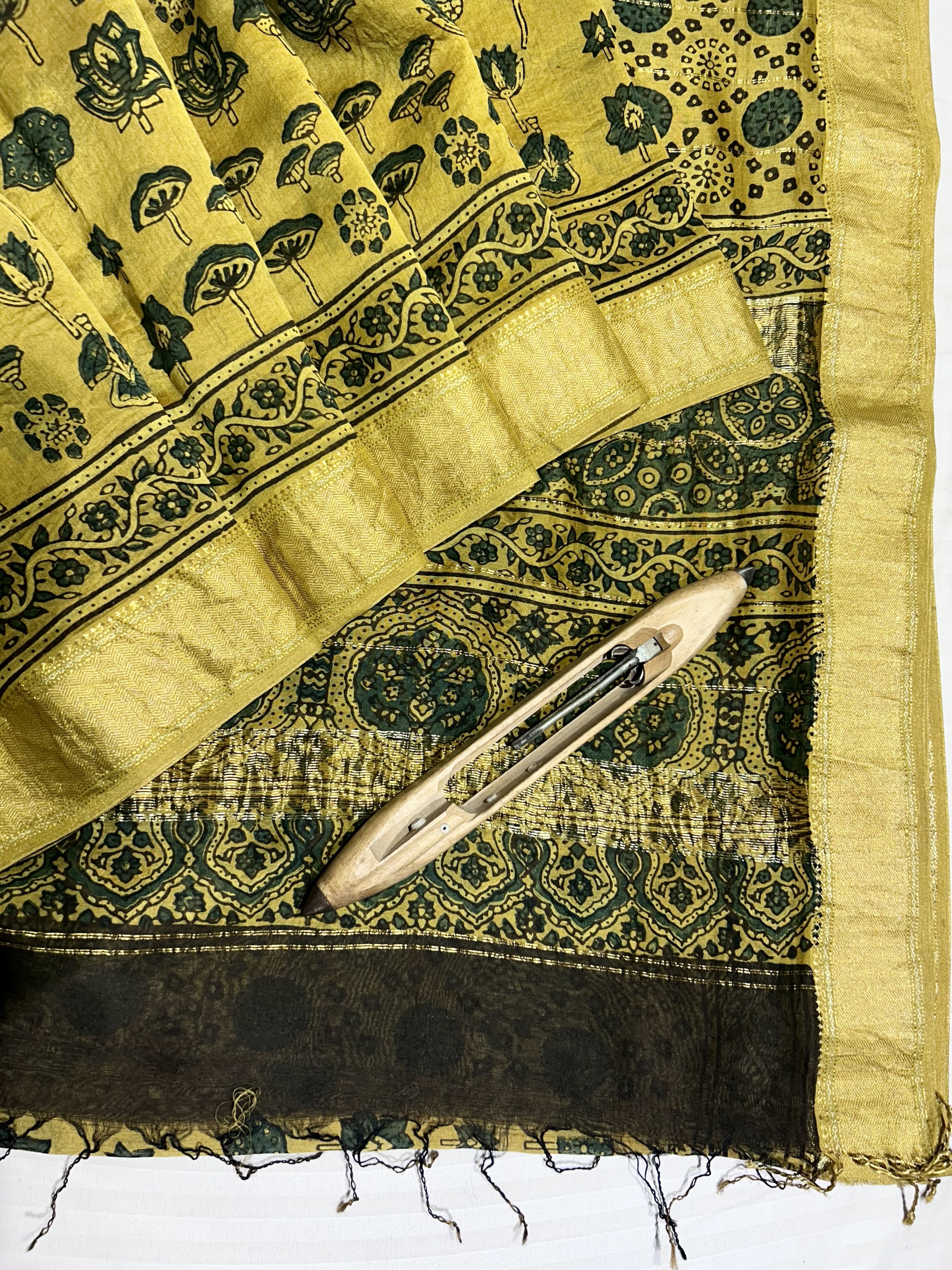
Maheshwari Handloom Fabric with Ajrakh Natural Block Print – A Perfect Blend of Tradition and Art
India is known across the world for its rich textile heritage and centuries-old handloom traditions. From intricate weaving techniques to artistic block printing methods, Indian textiles represent a deep connection between culture, craftsmanship, and creativity. Among the many famous textiles of India, Maheshwari Handloom fabric from Maheshwar, Madhya Pradesh, and the traditional Ajrakh natural block printing technique stand out as two extraordinary crafts.
Maheshwari Handloom Fabric with Ajrakh Natural Block Print – A Perfect Blend of Tradition and Art
When the elegance of Maheshwari handloom weaving meets the intricate patterns of Ajrakh block printing, the result is a stunning textile that reflects the beauty of traditional craftsmanship. This unique combination brings together two ancient art forms to create fabrics that are not only visually appealing but also rich in cultural significance.
Maheshwari Ajrakh textiles are increasingly becoming popular among fashion designers, textile collectors, and handloom lovers who appreciate sustainable and handmade fashion.
The Historical Legacy of Maheshwari Handloom
Maheshwari handloom weaving originates from the historic town of Maheshwar in Madhya Pradesh, situated along the sacred banks of the Narmada River. The weaving tradition was established in the 18th century by Maharani Ahilyabai Holkar, the visionary ruler of the Holkar dynasty.
Queen Ahilyabai played an important role in developing Maheshwar as a major center for handloom weaving. She invited skilled weavers from different regions of India, including Gujarat and Maharashtra, and encouraged them to settle in Maheshwar. These artisans combined their skills to create a unique style of weaving that later became known as Maheshwari Handloom.
Initially, Maheshwari textiles were woven primarily for royal families and temple offerings. Over time, these fabrics became popular among people across India because of their elegance, comfort, and distinctive design.
Today, Maheshwari handloom is recognized as one of India’s most graceful textile traditions.
Unique Characteristics of Maheshwari Fabric
Maheshwari handloom fabric is famous for its lightweight texture, elegant borders, and traditional motifs. The fabric is typically woven using a blend of silk and cotton, which gives it a soft yet slightly glossy finish.
Some key characteristics of Maheshwari fabric include:
• Lightweight and breathable texture
• Soft silk-cotton blend known as Silk by Cotton
• Elegant zari or thread borders
• Reversible borders known as Bugdi
• Traditional motifs inspired by nature and architecture
These features make Maheshwari fabric extremely versatile and comfortable to wear.
Traditional Motifs in Maheshwari Weaving
Maheshwari textiles are known for their beautiful and meaningful motifs. Many of these designs are inspired by elements of nature, architecture, and the surrounding environment of Maheshwar.
Some popular motifs include:
Chatai Pattern – Inspired by traditional woven mats
Eent (Brick Pattern) – Reflecting the architecture of Maheshwar Fort
Leher or Narmada Waves – Symbolizing the flowing Narmada River
Swan Motif – Representing grace and purity
Floral Borders – Inspired by natural beauty
These motifs are carefully woven into the fabric using traditional handloom techniques that require patience and skill.
Ajrakh Natural Block Printing – A Timeless Art
Ajrakh is one of the most intricate and respected natural block printing traditions in India. This craft is believed to be over 4000 years old and is famous for its complex geometric patterns and deep natural colors.
The word Ajrakh is believed to come from the Arabic word “Azrak,” meaning blue, referring to the deep indigo shades commonly used in this craft.
Ajrakh printing is traditionally practiced in parts of Gujarat and Rajasthan, and it is known for its elaborate printing and dyeing process.
The Ajrakh Printing Process
Ajrakh printing is a highly detailed and time-consuming process that involves multiple stages of printing, dyeing, and washing.
The process generally includes:
- Washing the fabric to remove impurities
- Treating the fabric with natural mordants
- Printing patterns using hand-carved wooden blocks
- Applying natural resist pastes
- Dyeing with natural colors such as indigo and madder
- Repeating printing and dyeing steps to create layered patterns
Each piece of Ajrakh fabric may take several days to complete, making it a true example of slow and artistic craftsmanship.
Natural Dyes Used in Ajrakh Printing
One of the most important aspects of Ajrakh printing is the use of natural dyes derived from plants and minerals. These dyes not only create beautiful colors but also make the fabric eco-friendly.
Common natural dyes include:
• Indigo – deep blue shades
• Madder root – rich red tones
• Iron and jaggery mixture – black shades
• Pomegranate rind – yellow and beige tones
Because of these natural dyes, Ajrakh textiles are considered sustainable and environmentally friendly.
The Fusion of Maheshwari and Ajrakh
When Maheshwari handloom fabric is combined with Ajrakh block printing, it creates a unique textile that blends two different traditions into one masterpiece.
The smooth and lightweight texture of Maheshwari fabric provides the perfect base for Ajrakh’s bold and intricate patterns. This fusion results in fabrics that are elegant, artistic, and highly distinctive.
Maheshwari Ajrakh textiles are now used to create:
• Designer Maheshwari Ajrakh Sarees
• Elegant Dupattas and Stoles
• Traditional Dress Materials and Suits
• Contemporary Fusion Wear
Each product reflects the craftsmanship of both handloom weavers and block printing artisans.
Growing Popularity in Modern Fashion
In recent years, traditional handloom textiles have gained significant popularity in the global fashion industry. Designers and conscious consumers are increasingly looking for handmade, sustainable, and ethically produced fabrics.
Maheshwari Ajrakh textiles perfectly match this demand because they combine:
• Traditional craftsmanship
• Eco-friendly dyeing processes
• Unique handcrafted designs
• Cultural authenticity
Many fashion designers now use Maheshwari Ajrakh fabrics to create modern garments while preserving traditional techniques.
Supporting Artisan Communities
Purchasing Maheshwari Ajrakh textiles directly supports the livelihoods of handloom weavers and block printing artisans. These crafts require years of skill and dedication, and supporting them helps preserve traditional knowledge for future generations.
By choosing handcrafted textiles, consumers contribute to:
• Sustainable rural employment
• Preservation of traditional crafts
• Promotion of slow fashion
• Reduction of machine-made mass production
Sustainable Fashion and Cultural Preservation
Today’s fashion industry is increasingly focusing on sustainability. Handloom fabrics and natural dye printing techniques like Ajrakh play an important role in promoting eco-friendly fashion.
Maheshwari Ajrakh textiles represent:
• Low environmental impact production
• Natural dye processes
• Traditional handmade craftsmanship
• Durable and long-lasting fabrics
These qualities make them an ideal choice for people who value sustainable and ethical fashion.
Conclusion
Maheshwari Handloom Fabric with Ajrakh Natural Block Print represents the perfect harmony between weaving and block printing traditions. The elegance of Maheshwari silk-cotton fabric combined with the artistic complexity of Ajrakh designs creates textiles that are both timeless and contemporary.
These fabrics are not only beautiful garments but also living symbols of India’s cultural heritage and artisan craftsmanship. By supporting Maheshwari Ajrakh textiles, we help keep these extraordinary traditions alive for generations to come.